
Here is a moving-day surprise almost nobody sees coming. You plug the TV in, run a channel scan, and roughly half the channels you had before have vanished.
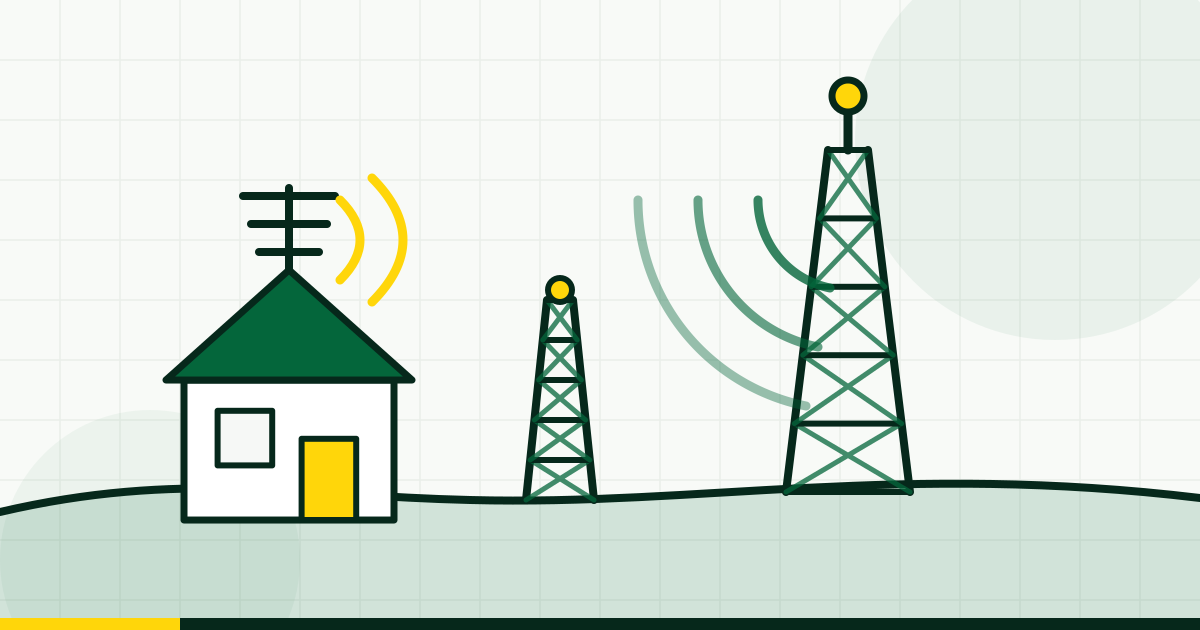
Nothing is broken. You have moved from an area served by a main transmitter to one served by a relay.
Multiplexes, briefly
Freeview channels are bundled into groups called multiplexes. Six of them carry the full national line-up.
Three are the public service multiplexes — BBC, ITV, Channel 4, Channel 5 and their relations. The other three carry most of what people think of as “the extra channels”: Dave, Film4, Yesterday, the shopping and music channels, and so on.
Main transmitters carry all six. Most relays carry only the three public service ones.
Relays exist to fill gaps — valleys, towns behind a hill, places the main mast cannot reach. There are hundreds of them, and if one serves your new address, you get BBC and ITV perfectly well and simply do not receive the rest.
Why nobody tells you
The estate agent does not know. The seller may not realise, because they have never lived anywhere else. And the official coverage checkers are aimed at “can you get Freeview here”, which usually answers yes — technically correct and not the information you needed.
We show the transmitters serving an area in the Broadband and TV section of the area report, with how many multiplexes each carries. If everything within range is a three-multiplex relay, that is worth knowing before you exchange rather than after.
The other two things worth checking
Aerial group and polarisation. Transmitters broadcast on particular frequency groups, and relays often broadcast vertically where main stations broadcast horizontally — that is why aerials on some streets point sideways compared to others. If you are moving to a relay area with a main-station aerial, it may need replacing or re-mounting.
What is actually installed. No dataset can tell you whether the property has a working aerial, a dish, or a cable connection, or whether there is an aerial socket in the room you want the TV in. Only the person selling or letting it knows. Ask them to show you live TV working — it takes thirty seconds and it is the single most reliable check available.
The honest limits
We can tell you which transmitters serve an area and what they carry. We cannot predict your signal.
Reception depends on the aerial, which way it points, how high the property sits, and whether there is a hill or a new block of flats in the way. Ofcom says as much about its own predictions. Anyone claiming to know your signal strength from a postcode alone is guessing.
If you are on a relay
You are not stuck. Satellite covers almost everywhere, though you will need a dish and permission — leases, conservation areas and listed buildings often restrict them. Streaming covers most of the missing channels if your broadband is up to it. And a better aerial pointed at a main transmitter sometimes works, if one is in range.
All fine solutions. All easier to arrange before you move than during your first week in a house full of boxes.
Transmitter data from Ofcom, licensed under the Open Government Licence v3.0. Shows which transmitters serve an area — not predicted signal strength. See the transmitters serving a postcode.
Comments
Loading…
Comments are open to members, so every one is attached to a real account.