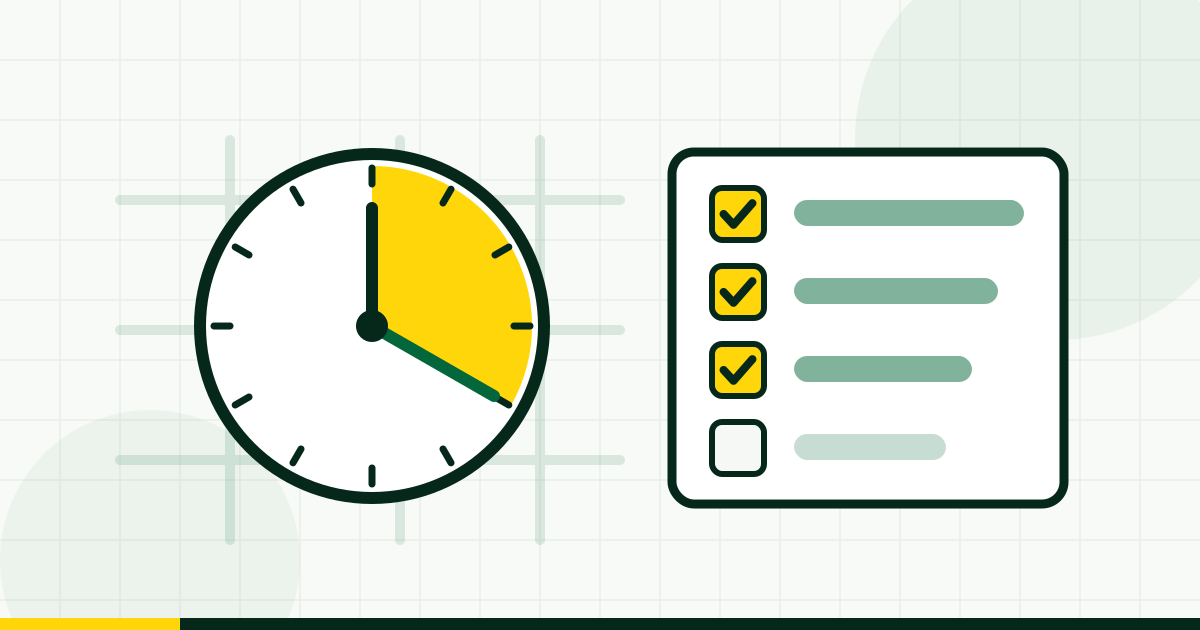

I have viewed houses I should never have bothered driving to. Not because the house was wrong, but because the street was, and I only found that out standing on it.
So now I do a check first. It takes about twenty minutes and it happens before I contact the agent, not after.
Minutes 1–5: what is actually within walking distance
Start with the things you would want on foot, because these are the ones that quietly decide whether you like living somewhere. A GP surgery. A pharmacy. A shop that sells milk at eight in the evening. A bus stop or station.
The trap is assuming a town centre postcode means everything is close. It often does. But I have checked postcodes where the nearest pharmacy was two miles away in a place that looked perfectly urban on a map.
What matters is the walk, not the straight line. A stop 0.4 miles away with a dual carriageway between you and it is not a 0.4 mile walk.
Minutes 6–10: the school question, even if you have no children
Two reasons to look at schools regardless. Catchment areas move house prices, so you are buying into that whether or not you use it. And schools tell you about the age mix of a street — several primaries within a mile usually means families, prams and noise at 8:30am. That is lovely or awful depending entirely on you.
Check the phase and the inspection judgement, but check the date of that judgement too. An Outstanding from years ago describes a school that may have changed head teacher twice since.
Minutes 11–15: crime, read properly
This is where people scare themselves badly.
Raw crime counts punish busy places. A town centre with shops, pubs and a station will always record more incidents than a cul-de-sac, and that tells you almost nothing about whether your car gets broken into. What is useful is the mix of categories and the trend across months.
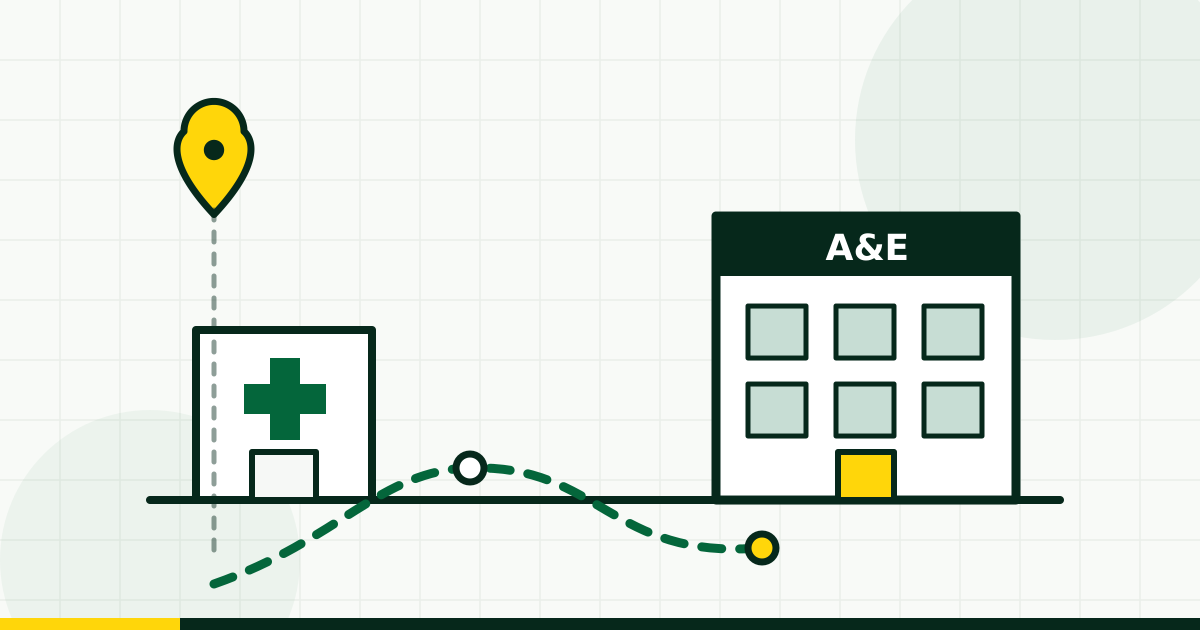
One thing worth knowing before you look: police.uk anonymises incident locations to a nearby representative point, so a pin on a map is not an address. If a cluster appears to sit on one house, that is the anonymising, not the neighbours.
Minutes 16–20: the things nobody mentions until you have moved
How is the TV fed? Aerial, dish or cable. No dataset can tell you what is installed in a specific property, and finding out afterwards costs a few hundred pounds. Ask the agent to show you live TV working.
What is the broadband situation? Not the advertised speed for the area — the actual line to that address, and how long installation takes. Two to three weeks is normal for a new connection, which matters a lot if you work from home.
Where do you park? Permit schemes are common and some councils take weeks to issue one.
When are the bins collected? Trivial, until it is your third week and you have missed two collections.
What this check does not do
It will not tell you whether the neighbours are friendly, whether the road floods in November, or whether the pub at the end is lovely or grim. Data cannot answer those. What it does is stop you spending a Saturday on a house that was never going to work, and give you specific things to ask when you do visit.
Twenty minutes. Two Saturdays saved, in my case.
Sources: police.uk, Department for Education, NHS organisation registers, OpenStreetMap. Every figure in a MoveCompass area report names the dataset it came from and when it was last refreshed.
Comments
Loading…
Comments are open to members, so every one is attached to a real account.