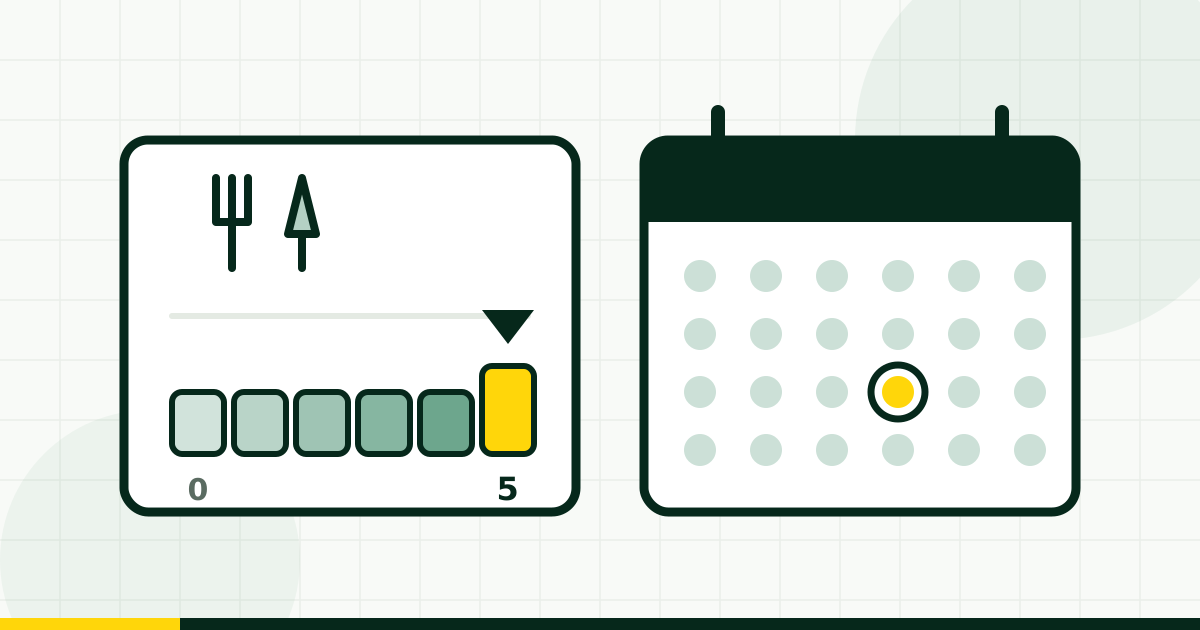

The Food Standards Agency publishes hygiene ratings for every registered food business in the UK. It is genuinely excellent open data — free, comprehensive, regularly updated. And it is routinely displayed in a way that misleads people.
A rating is a photograph, not a video
A hygiene rating records what an inspector found on one particular day. Nothing about it is continuous. It does not update when standards slip, and it does not update when they improve. It sits there, unchanged, until the next inspection.
How long is that? It depends on risk. A high-risk business gets inspected relatively often. A low-risk one — a shop selling pre-packaged goods, say — might go years.
So a 5 awarded last month and a 5 awarded four years ago are not the same statement. The first says a professional looked recently and was satisfied. The second says a professional was satisfied, once, at some point during a period that included a change of ownership you do not know about.
Most sites show both as a green 5.
What we do differently
We show the inspection date next to every rating, and we count how many of the results near a postcode were last inspected more than two years ago.
That count is often the most interesting number on the page. An area where most places were inspected in the last year gives you a current picture. An area where half the ratings are years old gives you a historical one, and you should read it accordingly.
Scotland works differently, and we do not flatten it
England, Wales and Northern Ireland use the 0–5 scheme most people recognise. Scotland uses a different one: Pass or Improvement Required. There is no score out of five, because the scheme is not scored.
The tempting thing is to convert — call a Pass a 5, so everything renders consistently. We do not, because it would be inventing a number the inspector never gave. A Scottish result shows Pass or Improvement Required, exactly as published.
What a low rating actually means
The rating reflects hygiene standards found at inspection — food handling, cleanliness, and the management systems behind them. A low score frequently comes from paperwork and procedures rather than anything you would notice as a customer.
It is also a snapshot in the other direction: a business rated 1 two years ago may have completely fixed things and simply not been reinspected yet.
How to use it when you are moving
As a texture reading of an area. A high street where most places are rated 4 and 5 tells you something mildly positive about the local trade. A cluster of low ratings might mean struggling businesses, or might mean one recent inspection round.
As a specific check. If there is a takeaway you would actually use, look it up. That is the use the FSA intended, and it is the one where the data is strongest.
What it is not is a measure of how good the food is. The rating has nothing to say about whether anyone enjoyed their dinner.
Hygiene ratings from the Food Standards Agency. Ratings reflect one inspection on one date; Scotland uses a Pass / Improvement Required scheme rather than a 0–5 score. Check hygiene ratings near a postcode.

Comments
Loading…
Comments are open to members, so every one is attached to a real account.