
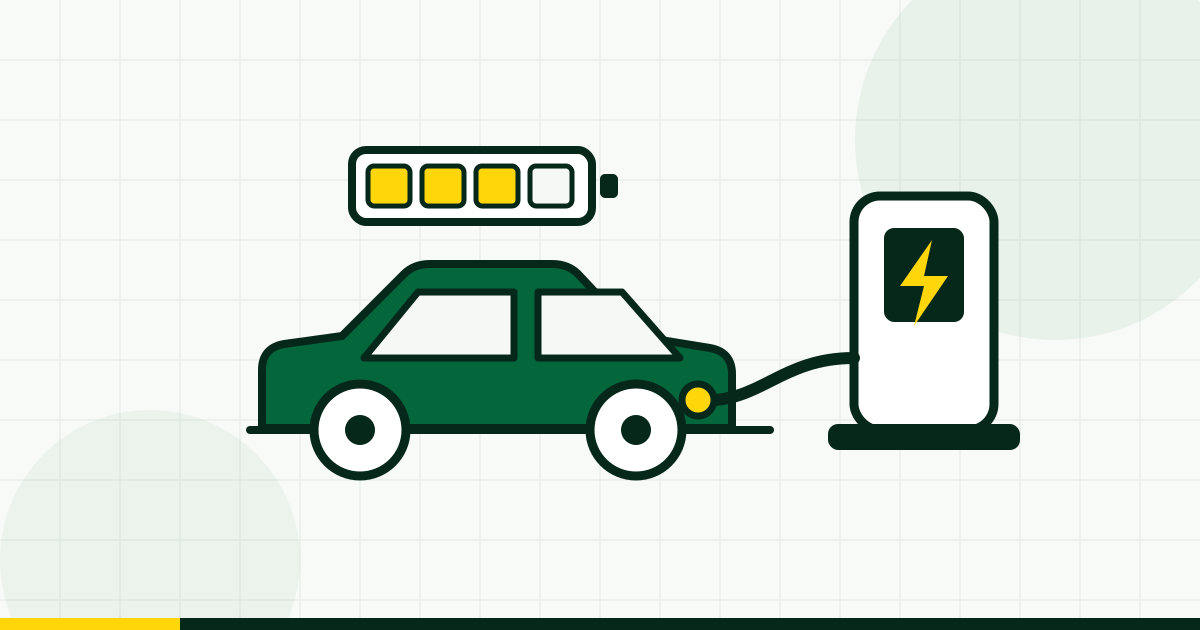
With a driveway, charging an electric car mostly takes care of itself. You plug in at night and forget about it. Without one, charging becomes part of your week, and a flat or terrace that looks perfect can turn into a daily hassle.
So if you drive electric, check the charging before you fall for the kitchen.
Start with the parking
The first question isn't where the nearest charger is. It's whether you can charge at home at all.
- Driveway or garage: you can usually fit a home charger. If you rent, you'll need the landlord's permission. With a leasehold flat, you'll need the freeholder's.
- On-street parking: you generally can't run a cable across the pavement. Many councils don't allow it because it's a trip hazard, and the ones that do usually want an approved cable channel. Check with the council before you assume.
- Allocated parking in a block: ask the managing agent whether chargers exist or are planned, and who pays for the electricity.
Then look at what's nearby
Our EV charging points tool maps public chargers around any postcode. When I look at a new area, I check three things:
What sort of chargers they are. A slow lamp-post charger on your own street is useful if you can leave the car there overnight. A rapid charger a mile away is useful if you'd rather top up in half an hour while you shop. They suit different lives.
How many there are. One charger on the street is one car's worth. If three neighbours also drive electric, it's often taken.
Who runs them. Different networks use different apps and prices. It's worth knowing before you're standing next to one in the rain.
What the map can't tell you
Our charger data comes from Open Charge Map, a public database that anyone can add to. It's the most complete open source we've found. The government's own National Chargepoint Registry was closed in November 2024. But because it's contributed by people, a charger can be missing, out of date, or broken on the day you turn up.
The map also doesn't show live availability or current prices. The operator's app will. Treat the map as "is there charging round here at all", then check the details with the network before you rely on it.
My rule of thumb
If I couldn't charge at home, I'd want a charger I could reach on foot and a rapid charger somewhere I already go, like the supermarket or on the commute. If a new area has neither, it's not a dealbreaker, but it's a cost in time that should be part of the decision.
If you spot a charger that's missing or wrong on our map, it's worth adding or correcting it on Open Charge Map. The next person to look will get the better answer.


Comments
Loading…
Comments are open to members, so every one is attached to a real account.